SWFL Sliding Glass Door Hard to Open? Storm Prep
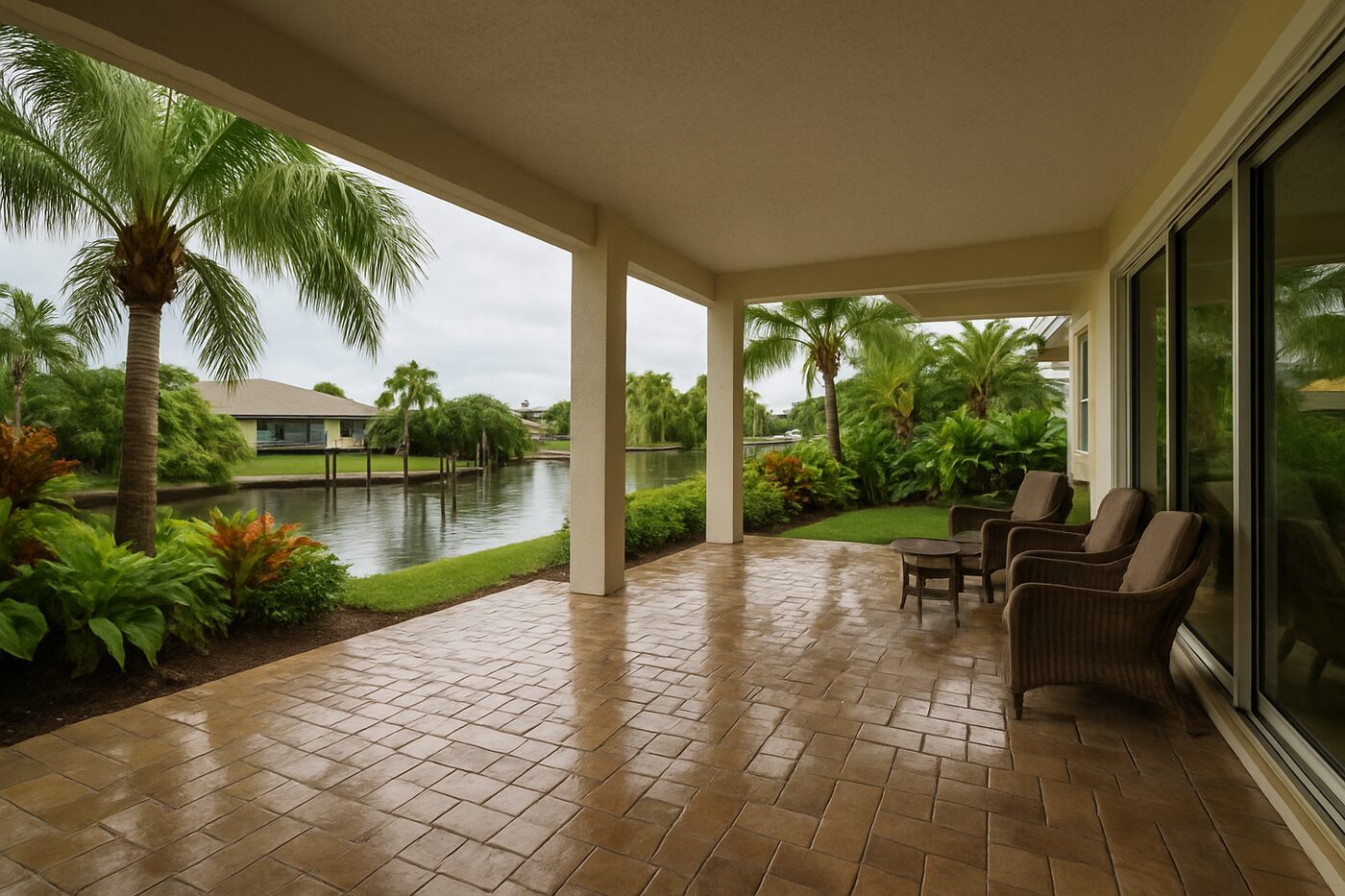
If your sliding glass door is hard to open in Southwest Florida this rainy week, storm‑driven grit in the track and heavy impact‑panel rollers out of adjustment are the usual causes; a quick 20‑minute clean and lube often helps, and pro fixes run 30–90 minutes.
Why do sliding doors bind after a rainy week in Southwest Florida?
Heavy tropical moisture pushes sand, mulch, and fine grit into bottom tracks. Along the Caloosahatchee corridor in Fort Myers, afternoon downpours wash debris into the channel; in canal neighborhoods across Cape Coral, salt aerosol accelerates pitting on the rail so rollers catch. In Estero and Bonita Springs, post‑Ian impact sliders are simply heavier — their rollers wear and fall out of adjustment faster after a season of humidity and use. On barrier edges like Fort Myers Beach, onshore flow leaves a salt film that makes a “morning drag” until the sun dries the sill.
Common storm‑week symptoms we see:
- Door catches at one spot each pass — often a small dent or corrosion pit on the track rail (see track repair).
- Whole run feels heavy — rollers are flat‑spotted or out of height adjustment (roller replacement).
- You have to lift to lock — latch/keeper misalignment from sag or debris (lock repair).
- Screen drags after a windy night — sand in screen track or worn screen rollers (screen repair).
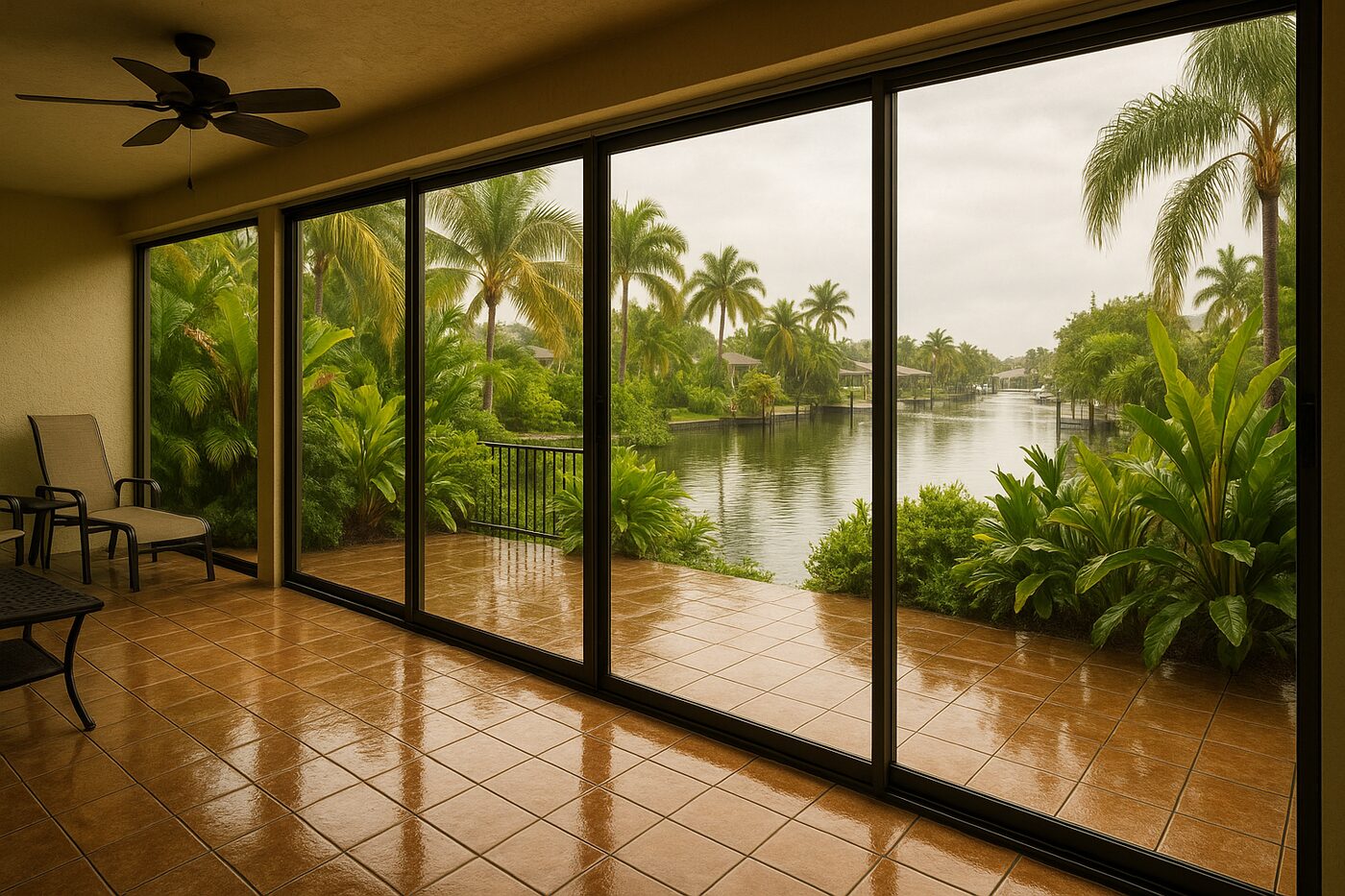
What 20‑minute DIY storm‑prep can I do safely?
Do these steps before adjusting anything:
- Vacuum the bottom track thoroughly, including the outer “return” where grit hides. A crevice tool plus a dry paintbrush/toothbrush lifts packed sand.
- Wipe the track clean. Use a damp microfiber, then dry. Clear weep/drain holes at the sill so water can exit.
- Lubricate correctly. Lightly spray a silicone dry‑film on the side walls of the track and the roller path — never on the vertical glass or directly on the rail crown. Avoid petroleum sprays; they attract grit. See our guide: silicone, never petroleum.
- Quick roller test. Open the door halfway and turn each bottom adjustment screw a quarter‑turn clockwise, then test. If the door gets worse or the screw is seized, stop — forcing it can strip the carriage.
If the panel is still heavy after cleaning and lube, the rollers likely need service (roller replacement) or the track needs capping (track repair).
How do I tell rollers vs. track vs. alignment — without pulling the panel?
- One spot “speed bump” each pass: Track issue. Run a fingertip along the rail crown (carefully). A tiny mushroomed ridge or pit means the door rode metal‑on‑metal when a roller failed. That’s a track repair or cap, typically 60–120 minutes.
- Heavy the whole length, no single catch: Roller issue. Flat‑spotted or corroded bearings make the door feel uniformly heavy. That’s roller replacement, usually 45–90 minutes.
- Locks only if you lift or shove: Alignment. Debris or sag moved the latch off the keeper. Cleaning and a small roller height change can bring it back; if not, it’s lock & handle repair in 30–60 minutes.
- Impact door that was smooth last season now drags: Weight‑driven roller wear. Many post‑Ian installs are hitting their first service interval together — see impact slider repair.
What does a professional repair include, and how long does it take?
A repair‑first visit focuses on restoring glide without replacing the frame:
- Pull panel safely, match and replace roller carriages, set height, and plumb the panel (roller replacement, 45–90 minutes).
- Cap or reform a damaged rail without removing the frame (track repair, 60–120 minutes; capping is a major savings vs. full frame replacement in Southwest Florida).
- Re‑align keeper, replace worn mortise, and secure loose handles (lock repair, 30–60 minutes).
- Finish with a full tune‑up and correct silicone dry‑film lube.
For market context only (not our pricing), Florida competitors publicly list typical repair totals under about $500 for worn‑roller/bent‑track fixes completed in roughly 90 minutes, versus multi‑thousand‑dollar replacement quotes for new impact doors. See examples like Mr Door Pro’s Central FL guide and local replacement cost posts from SWFL window dealers for comparison.
Will king‑tide season next month affect canal and bay homes?
Yes, especially on canals and bays from Cape Coral through Fort Myers. Per the South Florida Water Management District’s 2026 outlook, late‑September through November brings higher‑than‑normal tides that increase salt aerosol. That accelerates corrosion on standard steel roller bearings and track rails. Consider:
- Upgrading to stainless or sealed roller options when we service the door (impact slider repair).
- Installing a low‑profile track cap to isolate future pitting (track repair).
- Scheduling a fall tune‑up if you’re a seasonal owner in Lehigh Acres or North Fort Myers so the door isn’t sitting dirty for months.
Authoritative resources:
- National Hurricane Center tropical outlook for current disturbances and rainfall signals (see today’s discussion) — nhc.noaa.gov
- South Florida Water Management District 2026 king‑tide season page — sfwmd.gov
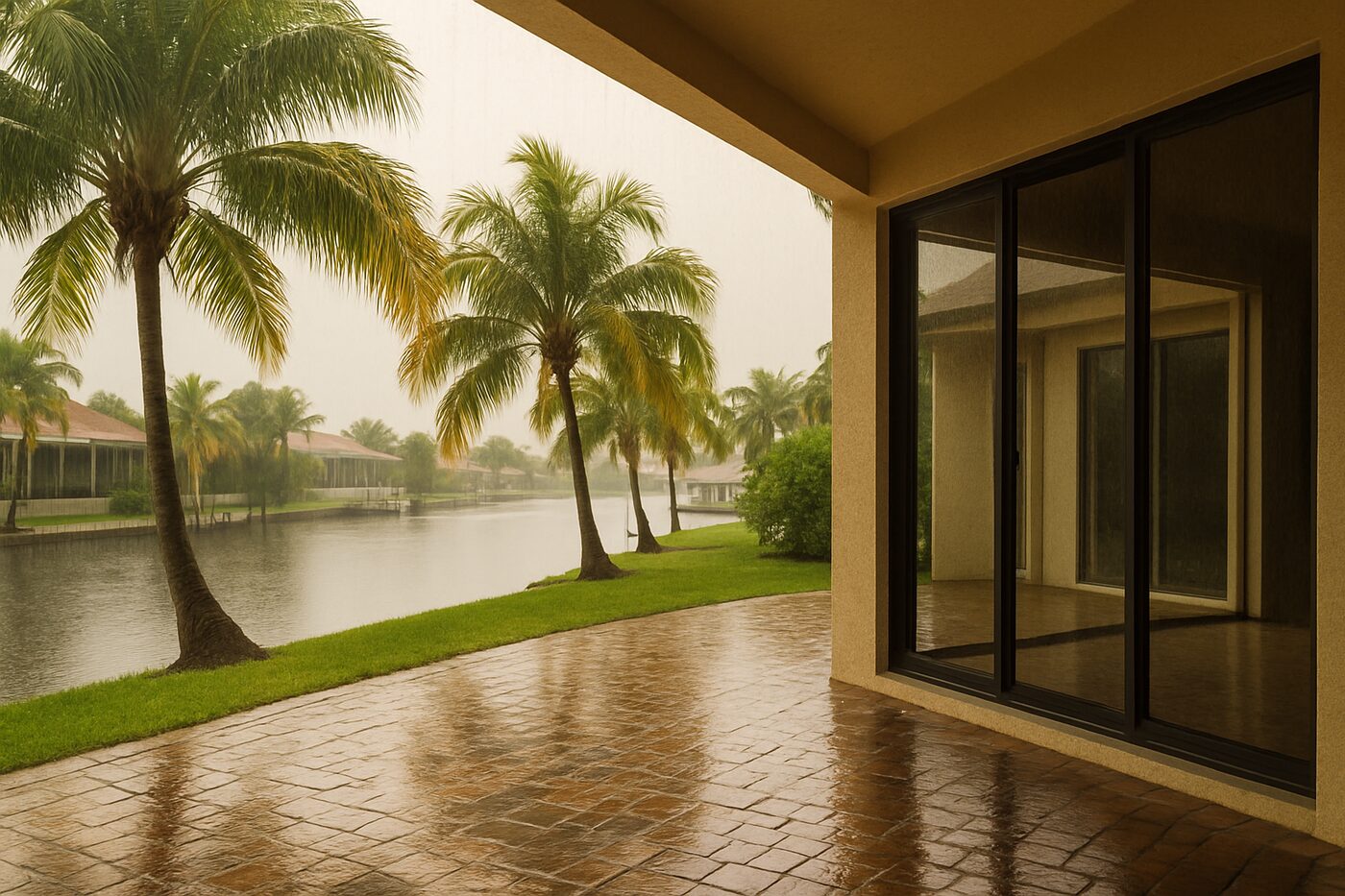
When should I stop DIY and call a pro?
- If the panel has to be lifted out. Many premium systems in Naples and Marco Island use oversized, heavy panels — often 200–400 lb. Removing them without the right gear risks injury and glass breakage.
- If the door jumped the track, the rail is visibly mushroomed, or a roller screw is seized. That’s professional track repair or roller replacement.
- If water intrusion or a swollen wood jamb is involved. Misdiagnosing jamb movement as a “tight lock” can crack a keeper or the glass.
Live in the broader region? See our Southwest Florida overview for how salt and humidity drive maintenance timing here.
Related
The repairs this covers
Keep reading
More from the crew
-
Bonita Springs Sliding Door Seals for King Tides
King tides in Bonita Springs push salt and humidity into slider tracks. See what seals to check now, safe DIY steps, and when pro repair is the smarter
-
Cape Coral King Tides: Sliding Glass Door Lock Repair
King tides push salty air into Cape Coral canal homes. Here’s how sliding glass door lock repair works now—keeper corrosion, alignment, and what to do
-
Sanibel King Tides: Sliding Glass Door Lock Repair
During Sanibel’s late‑summer king tides, salt spray often stops slider locks from latching. Here’s how we diagnose alignment vs. a bad lock and fix it in
Not sure which one it is?
Tell us what the door is doing. The on-site estimate is free, and you get the price before any work starts.
(239) 490-7406